
If you have any other questions about harm reduction at Carleton or want to find more ways to get involved, please email Dillon Brady, Manager of Student Conduct and Harm Reduction.
- Naloxone
- All People All Pathways Support
- Workshop & Training
- Community Resources
Naloxone
Concentrated forms of opioids like fentanyl and carfentanil are circulating within the Ottawa drug supply. These substances are potentially more harmful than other forms of opioids as they are more easily mixed in to other substances and deliver a much higher dose. Opioid overdose can be fatal or have other long lasting health impacts. This high level of risk means it is important that we be aware of the signs of an overdose and be prepared to help someone in need.
Overdose Prevention and Response
- Avoid using substances alone
- Avoid mixing substances
- Know your tolerance and go slow
- Know the signs and symptoms of an overdose
- Know how to respond to an overdose
Signs of Opioid Overdose
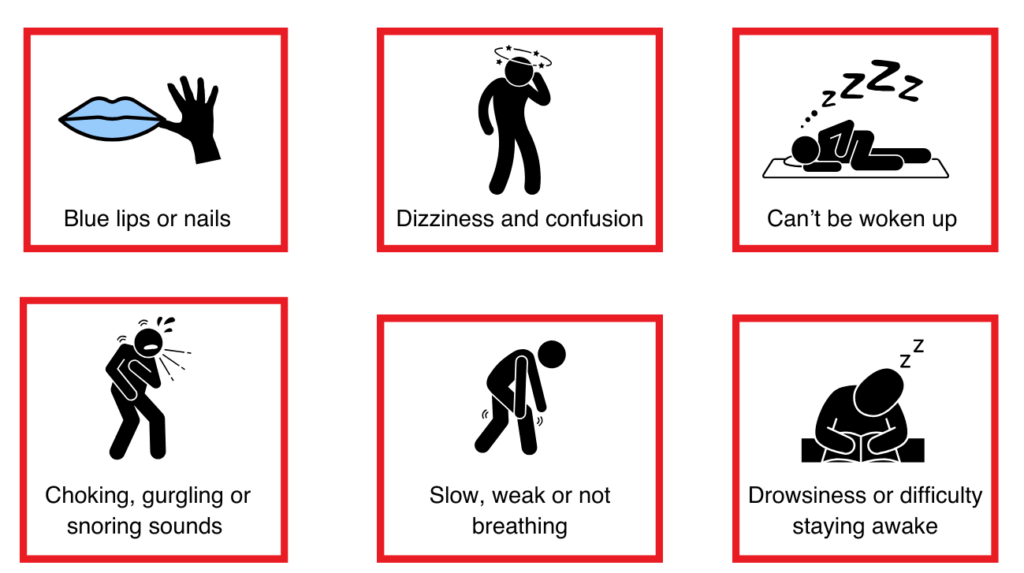
If you notice these signs, get help immediately by calling emergency medical services and if possible administer naloxone.
Naloxone is a potentially lifesaving treatment that can temporarily reverse the effects of an opioid overdose. Even after a treatment like naloxone is delivered, it is imperative to call 9-1-1 or other emergency services, as the effects are temporary and emergency medical treatment will still be needed.
There is no risk of harm presented by delivering naloxone, even to someone who is not experiencing an overdose. Carleton has naloxone stations in high traffic areas on campus and Special Constables with Campus Safety Services carry naloxone with them as well. Despite this, the best way to be prepared is to have a kit of your own. The province of Ontario maintains a list of pharmacies that provide naloxone free of charge including the Prescription Shop Pharmacy on campus.
To further enhance the awareness and availability of naloxone within the Carleton community, there are now 26 emergency naloxone stations installed across campus, each containing two doses of Narcan nasal spray. Several of the boxes are in the Residence precinct and others are in high traffic areas of the main campus. Where possible, these boxes have been installed near existing Automated External Defibrillators (AEDs) to increase visibility and demonstrate that overdose is a medical emergency and should be treated as such.
In an emergency:
If you see or experience a potential opioid overdose while on campus, it is important to contact Campus Safety Services for assistance as soon as possible at 613-520-4444. Special Constables with Campus Safety Services also carry naloxone and can coordinate a response with Emergency Medical Services to ensure the required care is provided.
The Good Samaritan Drug Overdose Act
The Good Samaritan Drug Overdose Act provides some legal protection for people who experience or witness an overdose who seek emergency help during an overdose.
The Act became law on May 4, 2017 and is intended to reduce fear of police attending overdose events and encourage people to help save a life.
Legal protection granted by the Act
The Good Samaritan Drug Overdose Act provides some legal protection for people who experience or witness an overdose and call 9-1-1 or their local emergency number for help.
The Act can protect you from:
- Charges for possession of a controlled substance (i.e. drugs) under section 4(1) of the Controlled Drugs and Substances Act
- Breach of conditions regarding simple possession of controlled substances (i.e. drugs) in:
- pre-trial release
- probation orders
- conditional sentences
- parole
The Good Samaritan Drug Overdose Act applies to anyone seeking emergency support during an overdose, including the person experiencing an overdose. The Act protects the person who seeks help, whether they stay or leave from the overdose scene before help arrives. The Act also protects anyone else who is at the scene when help arrives.
The Act does not provide legal protection against more serious offences, such as:
- outstanding warrants
- production and trafficking of controlled substances
- all other crimes not outlined within the Act
All People All Pathways
Carleton University has partnered with the Community Addictions Peer Support Association (CAPSA) to provide weekly virtual support meetings specifically for students interested in exploring their relationship with substance use during the academic year. All People All Pathways is a peer support group facilitated by individuals with living experience with substance use and substance use disorders. It is an open, drop-in group with no weekly commitment or expectations of abstinence and is also open to family and friends of those experiencing stigma and/or harms related to substance use.
CAPSA provides All People All Pathways to the wider community and those seeking support can find meeting times available year-round.
The All People All Pathways meetings specifically for students are held on Zoom every Thursday evening from 7:30 p.m. to 8:30 p.m. Eastern Time between Thurs. Sept. 10, 2026 to Thurs. April 15, 2027. Join the meetings on Zoom (meeting ID: 929 8756 9610, passcode: 787302).
The purpose of our weekly peer support group is to provide students impacted by substance use or substance use disorders with a safe environment to ask questions about their substance use health and share experiences about what has helped them on their journey, free from stigma or discrimination.
Each week, our meeting focuses on a different topic. There will be an educational component followed by discussion. Those in attendance are welcome to ask questions or provide suggestions based on their personal experience. All People All Pathways is meant to foster a safe space and what is shared with the group is kept confidential to respect participants and their experiences.
Our group is inclusive of all individuals, regardless of where they are along the substance use spectrum, who are seeking improved health and wellness with respect to their substance use, families, allies and professionals. All are welcome to attend our meeting.
Substance Use Health Consultations
This is an individual non-clinical session that provide psychoeducation about substance use health and the spectrum of substance use. The session will review substance use and harm reductions strategies as well as encourage participants to set self determined goals regarding their use for the short and long term. Participants will be provided strategies and resources in helping them reach and maintain their substance use health goals. To request a consultation or refer a student, contact the Manager, Student Conduct and Harm Reduction Dillon Brady or have the student contact Dillon directly.
Current students can also book a session with a substance use health focused physician at the Carleton Health Clinic by selecting a Substance Health Consultation through Health and Counselling Services (HCS) or via the appointment through the Telus Health Connect app or through the Telus Health Connect website.
Stigma Ends at CU
Stigma Ends at CU is a student-led campaign and student society functioning out of Carleton University with the goal to reduce stigma around addiction and substance use. This student society provides safe and non-judgmental ‘study or chill’ sessions and many other initiatives for students directly or indirectly affected by substance use and addiction.
Additional Training and Resources
The Office of Student Affairs actively builds and maintains relationships with service providers and experts in the field of substance use health and addiction. For specific training needs or requests please contact the Manager, Student Conduct and Harm Reduction Dillon Brady.
Access MHA
Access MHA is a program that assists people in accessing free services for mental health and substance use health/addiction issues. After filling out a brief information form, individuals will be contacted by an Access MHA staff member with further information about supports in their local area. This program supports Eastern Ontario including: Ottawa, Pembroke, Cornwall, Hawkesbury and surrounding areas, including the counties of Lanark, Leeds and Grenville, Stormont, Dundas, Glengarry, Prescott-Russell and Renfrew.
ConnexOntario
ConnexOntario provides free and confidential health services information for people experiencing problems with alcohol and drugs, mental illness or gambling by connecting them with services in their area. This program is free and accessible to anyone in Ontario.
Service Access to Recovery (SAR)
Service Access to Recovery (SAR) seeks to connect residents in the Ottawa region who are struggling with mental health and/or substance use health with community supports. The SAR service and the organizations it refers to are free and available to those 16 or older.
Rideauwood Addiction and Family Services
Rideauwood Addiction and Family Services is a treatment provider in Ottawa that provides substance use and addiction services to youth and adults as well as friends and family that are impacted by substance use. Notably they offer a free rapid access program for youth aged 11-24 who are looking to make changes in their substance use.
Recovery Care
Recovery Care offers access to treatment and recovery support for individuals experiencing substance use disorder in relation to opioids, alcohol and other substances. They have several locations across Ottawa and work with clients to provide assessment and support.
Canadian Mental Health Association Peer Support
The Canadian Mental Health Association Peer Support has a webpage that provides information on easily accessible peer support groups for a number of mental and substance use health issues.